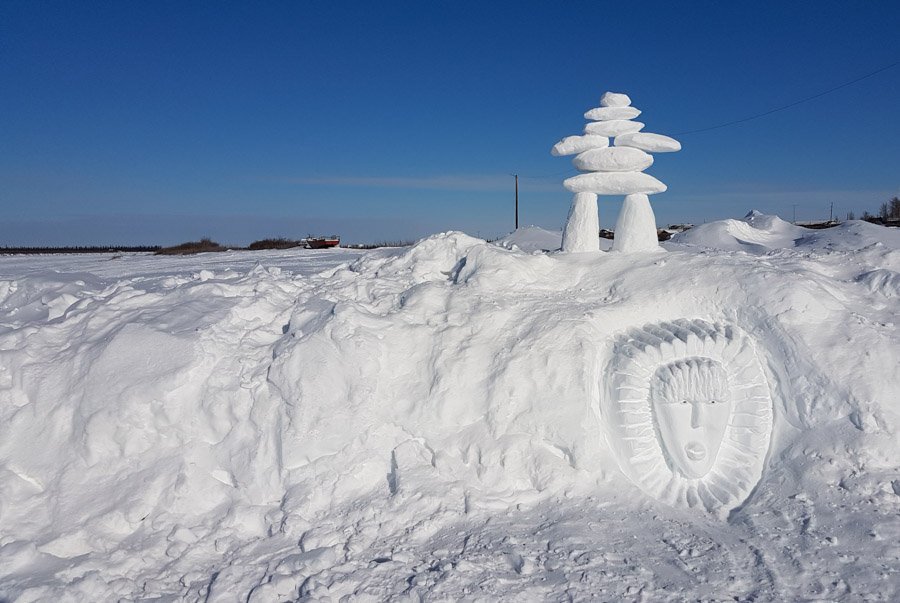
Inuvik is a place where weather isn’t just background—it’s part of the experience. Set above the Arctic Circle at about 68° north, Inuvik sits in the Western Arctic landscape near the Mackenzie Delta. It’s roughly 100 km from the Arctic Ocean as the crow flies, and about 138 km by road if you continue north to the coast. With that location comes real seasonal contrast: bright summer days that barely seem to end, and a winter stretch where the sun stays below the horizon and twilight becomes the day’s “sunlight.”
If you’re visiting, the climate can feel like an adventure all on its own. The good news is that Inuvik’s weather is very manageable with the right expectations: plan for big swings, watch the forecast, and pack layers in every season.
Inuvik’s seasons don’t flip overnight. They shift gradually, and the “feel” of each season is shaped as much by daylight as by temperature. Winter tends to arrive early and linger late. Summer is short, but it’s energetic and surprisingly comfortable when the weather cooperates.
Winter in Inuvik is long, dry, and often clear—beautiful, but serious. Temperatures commonly sit well below freezing, and cold snaps can push conditions into extreme ranges. Wind chill can make it feel colder, and visibility can drop during blowing snow or ice fog. Despite the intensity, winter is also when the skies can be at their most dramatic, and clear nights often bring opportunities to see the aurora.
Spring is a slow thaw. Daylight returns quickly, but snow and ice can hold on well into May. You’ll often see a mix of winter and spring conditions at the same time—brighter days, a warming sun, and lingering snowbanks. Seasonal travel routes and ice conditions depend heavily on the year and can change quickly.
Summer is defined by light. Around late May to mid-July, the sun can stay above the horizon through the night, creating the well-known “Midnight Sun.” Temperatures are often mild to warm, with occasional hot spells. Even on warmer days, evenings can cool quickly—especially with wind—so a light jacket is still a good idea. Mosquitoes are part of summer life in the delta environment, particularly during calm, warm weather.
Autumn is brief and beautiful. Cooler temperatures return, the days shorten noticeably, and the tundra colours can be striking. As nights lengthen, aurora viewing often improves again—sometimes before the deepest cold sets in. Snow can return by late fall, and the transition toward winter can be quick.
Daylight is one of Inuvik’s most defining features. Dates can vary slightly from year to year, but the overall pattern is consistent: a summer period of continuous daylight and a winter period when the sun remains below the horizon.
Inuvik is relatively dry compared with many parts of Canada. Based on long-term climate normals, total annual precipitation is about 241 mm, with snowfall making up a large portion of winter precipitation. Winter can bring blowing snow and ice fog, while summer can include rain showers and, at times, thunder.
Inuvik rewards visitors who pack thoughtfully. The goal is to stay warm and wind-protected in winter, and to stay comfortable and flexible in summer.
However you experience it—under endless daylight, in the glow of twilight, or beneath a sky lit by aurora—Inuvik’s climate is part of what makes the town unforgettable. Come prepared, respect the conditions, and you’ll find a season with a character all its own.