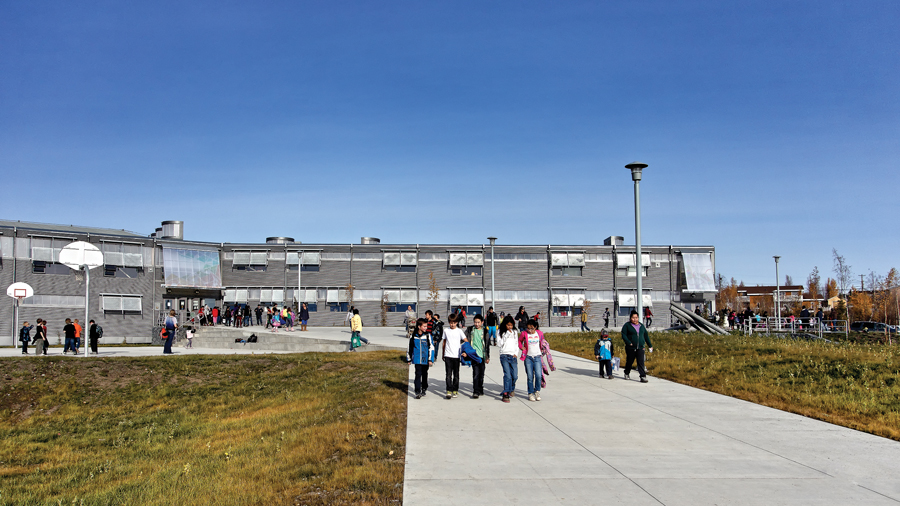
Education and employment are at the heart of life in Inuvik. As the regional hub of the Western Arctic, the community supports learning from early childhood through high school, along with adult upgrading, trades training, and research activity that connects local priorities with northern innovation. For people moving to town, Inuvik offers a practical mix of public-sector careers, skilled trades work, health and education roles, and opportunities tied to tourism, transportation, and community services.
What makes Inuvik stand out is how closely education and work are connected to place. Schools and training programs reflect the realities of northern living, and many learning opportunities include cultural teachings, land-based knowledge, and community involvement alongside the standard curriculum.
Inuvik follows the Northwest Territories curriculum, with learning that reflects local culture and the needs of a northern community. Students can complete Kindergarten through Grade 12 in town, and adults can also access upgrading and training opportunities depending on the year and program availability.
Inuvik has two main schools that serve students from early years through graduation:
Both schools include programming that reflects the community, and students may have opportunities to take part in Indigenous language learning and on-the-land experiences. Program offerings can change over time, but the goal is consistent: support strong learning while keeping culture and community connection close.
Aurora College’s campus in Inuvik supports a range of learning pathways for residents and people returning to school. Programming can shift from year to year, but commonly includes options such as adult upgrading, workforce training, and trades-related learning delivered through courses, short programs, or visiting cohorts.
Inuvik is also a centre for northern research. The Western Arctic Research Centre supports research projects and helps connect visiting researchers with local communities and priorities. This work often relates to northern life in practical ways—everything from climate and permafrost to community wellbeing and sustainable development.
Inuvik’s job market reflects its role as a regional service centre. Many careers are tied to the organizations and services that keep the Western Arctic running, along with seasonal opportunities that grow during tourism peaks and major community events.
Common employment areas include:
Because Inuvik is a smaller community, job searching often works best with a mix of online listings and local connection. Many employers post through territorial hiring systems, national job boards, and community channels. Career support and training services may also be available locally for people looking to upgrade skills, change careers, or enter the workforce.
Whether you’re coming to Inuvik to study, to work, or to start something new, the community offers meaningful paths shaped by northern life—practical, resilient, and rooted in the people and place of the Western Arctic.